Our Pallet Products
From standard wood pallets to specialty materials and custom configurations, we carry the full range of pallet products your business needs. Browse by type, size, or grade.
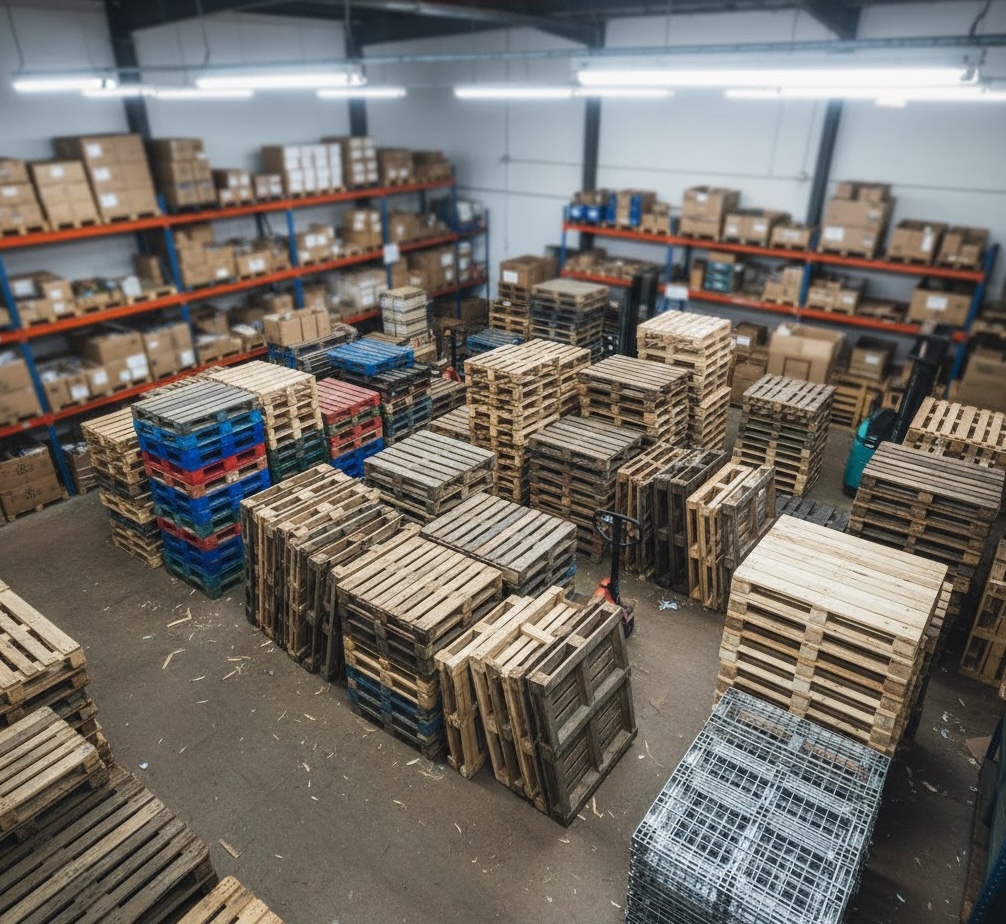
All Materials in Stock
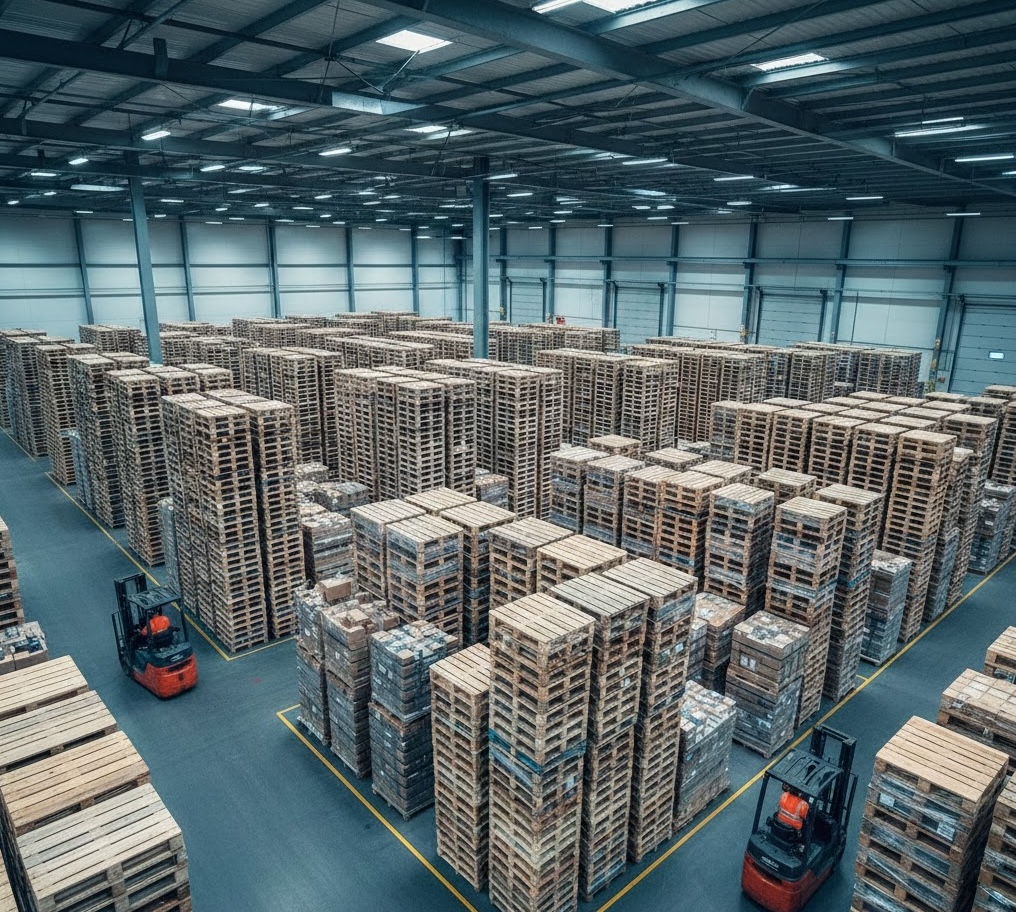
50,000+ Ready to Ship
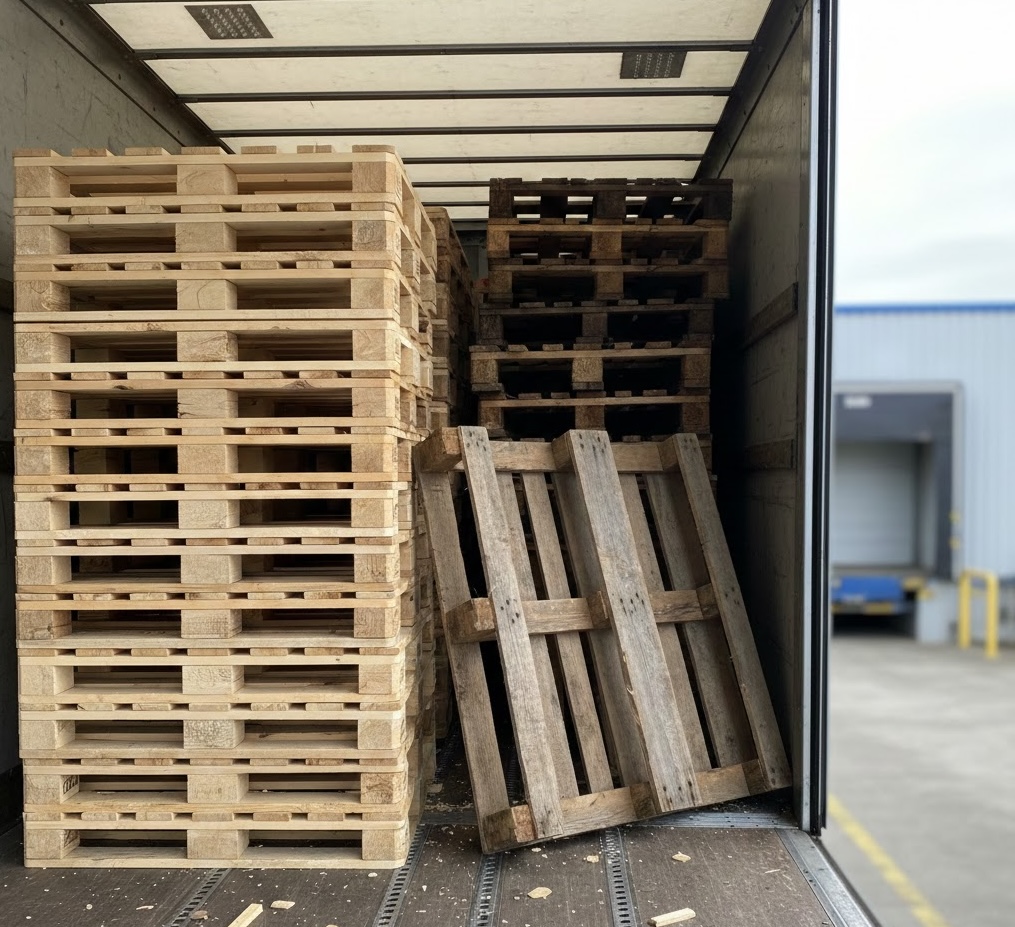
Inspected & Sorted
Product Categories
We organize our products into three primary categories to help you find exactly what you need. Click any category to explore detailed specifications, use cases, and pricing information.
Product Highlights
Rigorous Inspection
Every pallet undergoes a multi-point inspection process before being graded and added to our inventory. We check structural integrity, board condition, fastener security, and dimensional accuracy.
Eco-Friendly Sourcing
We prioritize recycled and reclaimed materials. Our wood pallets come from sustainable sources and our recycling program ensures minimal waste ends up in landfills.
Volume Pricing
Competitive pricing across all product lines with significant discounts for bulk orders. Whether you need 50 pallets or 5,000, we have pricing models to fit your budget.
Fast Delivery
Same-day quotes and rapid fulfillment. We maintain a large inventory of the most popular sizes and grades so you can get what you need when you need it.
Popular Products
Our most frequently ordered products, trusted by hundreds of businesses across the Pacific Northwest.
48x40 GMA Wood Pallet
Stringer | Grade A-C
The North American industry standard. Used by over 80% of US businesses for shipping and warehousing. Four-way entry, compatible with all standard forklifts and pallet jacks.
2,500 lb dynamic capacity | 30-48 lbs empty | 6.5" height
48x40 Block Pallet
Block Style | Grade A-B
Superior strength and true four-way entry. Block pallets use blocks between the top and bottom decks, offering better load distribution. Ideal for heavy or automated applications.
2,800 lb dynamic capacity | 45-55 lbs empty | 6" height
48x48 Square Pallet
Stringer | Grade A-C
Perfect for the beverage and drum industries. The square footprint maximizes truck space when shipping cylindrical containers and provides even weight distribution.
2,800 lb dynamic capacity | 40-55 lbs empty | 6.5" height
HDPE Plastic Pallet
Nestable | New
Lightweight, sanitary, and incredibly durable. High-density polyethylene pallets are ideal for food processing, pharmaceutical, and cleanroom environments where hygiene is critical.
2,200 lb dynamic capacity | 15-22 lbs empty | ISPM-15 exempt
Heat Treated Pallet (HT)
ISPM-15 Compliant
Required for all international wood pallet shipments. Our heat-treated pallets meet ISPM-15 standards, with core temperatures reaching 56 degrees C for a minimum of 30 minutes.
Stamped IPPC/HT | All grades available | 180+ countries accepted
Pallet Collar System
Hinged Collar + Lid
Transform any standard pallet into a reusable shipping container. Stackable collars fold flat when not in use. Available in wood and plastic, standard and custom sizes.
200mm per collar height | Up to 5 collars stackable | Hinged corners
42x42 Telecom Pallet
Stringer | Grade A-B
The telecommunications industry standard, widely adopted for paint cans, coatings, and cylindrical packaging. The square shape offers excellent stability for round containers and provides uniform load distribution across all four sides.
2,500 lb dynamic capacity | 35-45 lbs empty | 6" height
Presswood Export Pallet
Molded Wood | New
Manufactured from compressed wood fibers and resin, presswood pallets are ISPM-15 exempt, lightweight, and ideal for one-way international shipments. They nest together to save 60% of return freight storage space.
1,500 lb dynamic capacity | 15-22 lbs empty | ISPM-15 exempt
Steel Racking Pallet
Metal | Heavy Duty
Engineered for permanent racking installations and heavy industrial loads. Steel pallets resist moisture, pests, and fire. Expected lifespan exceeds 10 years even in demanding outdoor environments. Ideal for automotive and aerospace components.
5,000+ lb dynamic capacity | 60-90 lbs empty | Fire resistant
Material Comparison Guide
Choosing the right pallet material is one of the most important decisions in your supply chain. Each material has distinct advantages and trade-offs across cost, performance, compliance, and environmental impact. The table below provides a detailed head-to-head comparison across twelve key criteria so you can make an informed decision based on your specific operational requirements, industry regulations, and budget constraints.
Wood remains the most widely used pallet material globally, accounting for approximately 90-95% of all pallets in circulation. However, plastic, metal, and presswood pallets each serve critical niches where their unique properties deliver significant advantages. Many businesses use a mix of materials, reserving plastic for closed-loop food supply chains, metal for permanent racking, and wood for general distribution.
| Feature | Wood | Plastic | Metal | Presswood |
|---|---|---|---|---|
| Typical Cost (per unit) | $5 - $25 | $15 - $80 | $50 - $200+ | $8 - $18 |
| Dynamic Load Capacity | 1,500 - 2,800 lbs | 1,500 - 5,000 lbs | 2,000 - 5,000+ lbs | 1,200 - 2,500 lbs |
| Static Load Capacity | 3,000 - 6,000 lbs | 5,000 - 30,000 lbs | 5,000 - 15,000+ lbs | 2,500 - 5,000 lbs |
| Durability Rating | Moderate | High | Very High | Moderate-Low |
| Lifespan (Trips) | 5 - 20 | 50 - 200+ | 100 - 500+ | 3 - 10 |
| Empty Weight (48x40) | 30 - 70 lbs | 15 - 50 lbs | 40 - 120 lbs | 15 - 30 lbs |
| Moisture Resistance | Low (absorbs moisture) | Excellent (impervious) | Good (rust risk on steel) | Low-Moderate |
| Repairability | Easy & Cheap ($2-5 per repair) | Difficult (usually not feasible) | Requires Welding ($15-30) | Not Repairable |
| Recyclability | Excellent (mulch, biomass, reuse) | Good (re-pelletized) | Excellent (scrap value) | Excellent (compostable) |
| ISPM-15 Exempt | No (HT Required for export) | Yes | Yes | Yes (manufactured product) |
| Food / Pharma Safe | With HT treatment only | Yes (FDA compliant) | Yes (stainless options) | Limited |
| Fire Resistance | Low (combustible) | Moderate (fire retardant avail.) | Excellent (non-combustible) | Low (combustible) |
| Pest / Insect Risk | Moderate (untreated) | None | None | None (processed material) |
| Customization Options | Extensive (any size, notching, branding) | Limited (mold-dependent) | Moderate (weld/cut custom) | Limited (mold-dependent) |
| Nestable / Stackable | Stackable only | Both options available | Stackable, some collapsible | Nestable designs available |
| Environmental Impact | Renewable, biodegradable | Petroleum-based, recyclable | Energy-intensive production | Uses recycled wood waste |
| Best For | General shipping, warehousing, one-way | Food, pharma, closed loops, export | Heavy loads, outdoor, racking | Export, one-way international |
Prices shown are approximate per-unit costs and vary based on quantity, condition, and market conditions. Contact us for a custom quote.
When to Choose Wood
Wood pallets are the backbone of the North American supply chain. They are the most cost-effective option for general shipping and warehousing, and they can be easily repaired and recycled. A single 48x40 wood stringer pallet can be repaired and re-used 5 to 20 times before it reaches end of life, at which point the lumber is typically ground into mulch, animal bedding, or biomass fuel.
Wood is the best choice when you need custom dimensions (any size can be built within days), when repairability matters (a broken deck board can be replaced for $2-5), or when cost per trip is your primary concern. Over 500 million wood pallets are manufactured in the United States each year, and another 350 million are repaired and returned to service.
The main limitations of wood are moisture absorption (which can lead to mold growth in humid environments), susceptibility to insect infestation (requiring heat treatment for export), and weight variability (moisture content can add 10-20% to the empty weight). For food and pharmaceutical applications, heat-treated hardwood pallets with clean, light-colored wood are recommended.
When to Choose Plastic
Plastic pallets excel in closed-loop supply chains where pallets are returned and reused many times. While the upfront cost is 3-5 times higher than wood, a high-quality HDPE plastic pallet can last 200 or more trips, bringing the cost per trip well below wood over the pallet's lifetime. Companies like Costco, Procter & Gamble, and major pharmaceutical distributors rely heavily on plastic pallets.
Plastic is the clear winner for food safety (non-porous, easy to wash and sanitize, FDA compliant), pharmaceutical applications (cleanroom compatible, no splinters or particles), and international shipping (ISPM-15 exempt, no heat treatment needed). Nestable plastic pallets save up to 70% of return freight space compared to wood, making them ideal for companies that need to ship empty pallets back.
The disadvantages of plastic include higher initial cost, difficulty of repair (most damage requires replacement), limited custom sizing (dimensions are determined by injection molds), and a higher carbon footprint at manufacture. However, end-of-life plastic pallets can be ground up and re-pelletized into new pallets or other products, providing a circular lifecycle.
When to Choose Metal
Metal pallets (steel or aluminum) are the premium option, designed for applications where extreme durability, heavy loads, or harsh environments make other materials impractical. A steel pallet can support dynamic loads of 5,000 lbs or more and last over 10 years even in demanding outdoor, high-temperature, or corrosive environments. They are commonly used in automotive manufacturing, aerospace component storage, military logistics, and heavy machinery distribution.
Metal pallets are fireproof (critical for hazardous material storage), pest-proof, and impervious to moisture. They maintain consistent dimensions throughout their lifespan, making them reliable for automated storage and retrieval systems. Aluminum pallets offer similar benefits at roughly half the weight of steel, which reduces shipping costs and is preferred in air freight.
The primary downside is cost: steel pallets typically start at $50 and can exceed $200 for custom configurations. They are also heavier than all other options, which increases freight costs. However, metal pallets retain strong scrap value at end of life, recovering 20-40% of the original purchase price through metal recycling.
When to Choose Presswood
Presswood (also called molded wood, compressed wood, or engineered wood) pallets are manufactured by compressing recycled wood fibers or chips with heat-activated resin under high pressure. The result is a uniform, lightweight, pest-free pallet that is automatically ISPM-15 exempt because the manufacturing process exceeds heat treatment requirements. This makes presswood the most economical choice for one-way international shipments.
Presswood pallets typically weigh 50-60% less than equivalent wood pallets, reducing freight costs significantly on weight-limited shipments. Many designs are nestable, meaning empty pallets stack inside each other to save 60-70% of storage and return-freight space. They produce no splinters, nails, or loose fasteners, which eliminates product damage risk from pallet debris.
The limitations of presswood include lower load capacity compared to solid wood (typically 1,200-2,500 lbs dynamic), inability to repair (damaged pallets must be discarded or recycled), and susceptibility to moisture degradation over extended exposure. They are best suited for single-use or short-lifecycle applications where their light weight and export compliance outweigh the lower reusability. At end of life, presswood pallets are fully compostable or can be used as biomass fuel.
Pallets for Every Industry
Different industries have different pallet requirements. Food and beverage companies need sanitary, heat-treated pallets. Automotive manufacturers require heavy-duty block pallets. Pharmaceutical companies need HDPE plastic pallets for cleanroom compatibility. Whatever your industry, we have the expertise and inventory to match.
Our team has decades of combined experience supplying pallets to businesses across every major sector. We understand the specific regulations, handling challenges, and cost pressures each industry faces, and we tailor our product recommendations accordingly. Below are the industries we serve most frequently, along with the pallet types and materials we typically recommend for each.
Not Sure What You Need?
Our pallet specialists can help you determine the optimal pallet type, size, and grade for your specific application. We consider factors like load weight, stacking requirements, transportation method, storage environment, and budget to recommend the best solution.
- Free consultation and needs assessment
- On-site evaluation available
- Same-day recommendations
- No obligation quotes
Industry-Specific Pallet Recommendations
We have matched our product lineup to the specific requirements of each major industry. Use this guide to quickly identify which pallet type, material, and grade are typically recommended for your sector.
Food & Beverage
FDA compliance, FSMA traceability, no harboring of bacteria, easy washdown, ISPM-15 for export. HDPE plastic pallets are ideal for direct food contact; Grade A heat-treated wood pallets are acceptable for packaged goods.
Standards: FDA, FSMA, HACCP, ISPM-15
Pharmaceutical & Healthcare
Cleanroom compatibility, GMP compliance, consistent dimensions for AS/RS automation, no particle shedding, easy sterilization. Plastic pallets dominate this sector due to hygiene requirements.
Standards: FDA, cGMP, ISO 14644, USP
Automotive & Heavy Machinery
High dynamic load capacity (2,500+ lbs), true four-way entry for efficient material flow, compatibility with automated conveyor systems, resistance to oils and solvents. Block pallets provide superior strength.
Standards: AIAG, OEM-specific specs
Retail & E-Commerce
Clean appearance for customer-facing displays, consistent quality for automated DC systems, half-pallets for in-store merchandising. Retailers like Costco and Walmart often specify Grade A minimum.
Standards: Retailer-specific vendor guides
Chemical & Hazardous Materials
Chemical resistance, fire retardant options, spill containment lip on plastic models, non-sparking materials for flammable environments. Steel pallets for high-temperature or fire-risk zones.
Standards: OSHA, EPA, DOT, NFPA
Agriculture & Produce
Heat treatment for USDA compliance, ventilated deck designs for airflow around produce, cost-effective for seasonal high-volume shipments. Presswood is popular for export produce shipments.
Standards: USDA, APHIS, ISPM-15
Construction & Building
Heavy load capacity for building materials (concrete, lumber, roofing), weather resistance for outdoor storage, ability to handle irregular and overweight loads. Custom oversized pallets for large items.
Standards: OSHA job site safety
Electronics & Technology
Electrostatic discharge (ESD) protection for sensitive components, clean and particle-free surfaces, precision dimensions for automated handling, cushioned or anti-vibration options for fragile goods.
Standards: ANSI/ESD S20.20, IPC/JEDEC
Military & Government
Built to MIL-STD-1660 specifications, air-drop compatible, RFID tagging capability, specific marking and construction requirements. Aluminum pallets for airfreight weight savings.
Standards: MIL-STD-1660, DLA specs
Our Ordering Process
Ordering pallets from us is straightforward, whether you need 50 standard pallets or 5,000 custom units. We have streamlined every step from initial inquiry to delivery so you get the right products at the right time with minimal hassle. Here is how the process works from start to finish.
Inquiry & Consultation
Contact us by phone, email, or through our website form. Tell us what you need: pallet type, size, grade, quantity, and delivery timeline. If you are unsure, our specialists will ask the right questions about your product weight, stacking requirements, shipping method, and industry to recommend the best option. Most consultations take 10-15 minutes.
Response time: Same business day
Quote & Confirmation
We prepare a detailed quote within hours, including per-unit pricing, volume discounts, delivery fees, and any special treatment costs (heat treatment, fumigation, custom branding). Quotes are valid for 7-14 days depending on market conditions. Once you approve the quote, we confirm your order and lock in pricing.
Quotes provided within 2-4 hours
Fulfillment & Quality Check
Your order is pulled from our inventory or scheduled for production (custom orders). Every pallet is inspected before shipment to verify it meets the specified grade, size, and treatment requirements. For large orders, we can arrange a pre-shipment inspection or send sample photos for your approval before the full order ships.
Stock items ship within 1-3 business days
Delivery & Follow-Up
We coordinate delivery using our own fleet or trusted carrier partners. Standard delivery covers the greater Pacific Northwest, with nationwide shipping available for larger orders. After delivery, we follow up to confirm the order meets your expectations and discuss any ongoing supply needs. Recurring order programs are available for regular customers.
Local delivery within 24-72 hours
Ordering Details
Minimum Order Quantities
No strict minimums for stock items. Custom pallets require a minimum of 50 units. Delivery minimums may apply depending on your location (typically 20+ pallets for free local delivery).
Payment Terms
We accept all major credit cards, ACH transfers, and company checks. Net-30 terms are available for approved commercial accounts with a completed credit application. Prepayment is required for first-time orders over $2,500.
Lead Times
Stock items (48x40 Grade A/B/C, plastic pallets, collars): 1-3 business days. Heat-treated pallets: 2-5 business days. Custom sizes and builds: 5-15 business days depending on complexity and quantity.
Delivery Coverage
Free delivery within a 50-mile radius for orders over $500. Extended delivery throughout the Pacific Northwest, California, and Western US. Nationwide shipping available via flatbed carrier for truckload quantities.
Return Policy
Stock pallets may be returned within 7 days if they do not meet the specified grade. Custom orders are non-returnable. Pallets damaged during delivery are replaced at no charge with photo documentation.
Recurring Order Programs
For businesses with ongoing pallet needs, our recurring order program eliminates the hassle of reordering and protects you from price fluctuations. Set up a delivery schedule that matches your consumption rate, and we handle the rest.
Locked-In Pricing
Contract pricing remains stable for the agreement period (typically 3-12 months), regardless of market fluctuations in lumber or material costs.
Flexible Scheduling
Choose weekly, bi-weekly, or monthly deliveries. Adjust quantities up or down with 48-hour notice to match seasonal demand changes.
Priority Fulfillment
Recurring customers receive priority access to inventory during high-demand periods. We reserve stock specifically for your scheduled orders.
Dedicated Account Manager
A single point of contact who knows your business, preferences, and history. Direct phone and email access for immediate support.
Ready to Order?
Browse our detailed product pages or contact us directly for personalized recommendations and volume pricing.